




Pick a size

Accueil / SHIAI / Guides d'achat
Sports gear is constantly evolving to provide athletes with the best possible performance. Among these innovations, the rash guard—originally designed for water sports and later adopted by combat sports—has caught the attention of runners. But should you wear a rash guard for running? In this article, we explore the benefits and drawbacks of wearing a rash guard during a running session.
 Par Romain Brunel
Mis à jour le 25/10/2026
2 min de lecture

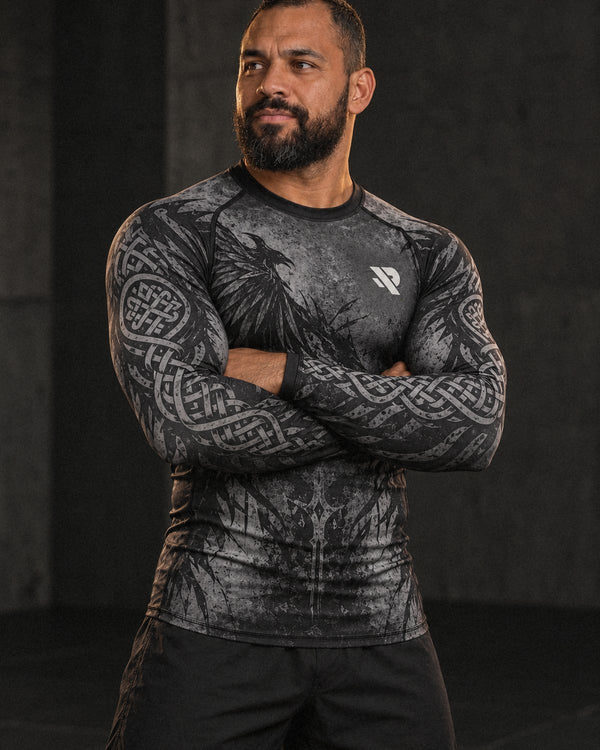
A rash guard is a tight-fitting, long- or short-sleeved shirt derived from the English term rash guard. This type of clothing was initially developed for water sports enthusiasts, such as surfers, and later adopted by martial artists, particularly in Brazilian Jiu-Jitsu. The primary function of a rash guard is to prevent skin irritation and chafing caused by friction with environmental elements (such as wetsuits, surfboards, or training mats) and other participants. Additionally, rash guards often feature antibacterial properties and high sun protection.
One of the main advantages of wearing a rash guard while running is its ability to protect against harmful UV rays. Most rash guards offer a high UPF 50+ sun protection rating, effectively shielding the skin from sun damage. This is especially beneficial for long-distance runners and endurance joggers who spend extended hours outdoors.

Although initially designed to minimize skin irritation in water sports, rash guards also provide advantages for runners. The materials used in rash guards help reduce skin friction caused by movement or contact with other clothing and gear. This can be particularly useful for runners who experience discomfort in areas like the arms and underarms.
Due to the stretchy nature of the fabric, a rash guard allows for greater freedom of movement while running. Unlike other types of shirts, a rash guard conforms closely to the body, enabling runners to move freely without restrictions or discomfort.
The synthetic fabric used in rash guards is designed to wick moisture away from the skin and dry quickly. This feature is particularly advantageous for long runs or jogging in hot weather, where excessive sweating can become uncomfortable.
Overall, wearing a rash guard for running offers undeniable benefits in terms of skin protection, moisture management, and unrestricted movement. However, some runners may prefer other types of clothing that better suit their personal style or budget. The key is to choose high-quality, well-fitted gear that ensures comfort throughout your running session.
Dans le vestiaire


SHIAI

À quoi sert un rash guard, de quoi il est fait et comment le choisir : JJB, grappling, MMA.

Peau, hygiène, partenaires, mouvement et règlements : 5 raisons concrètes de porter un rash guard en JJB, grappling et MMA.

Rash guard, short et spats : la tenue de grappling pièce par pièce, et ce qu'imposent les règlements IBJJF, ADCC et UWW.
Les sorties de designs, les guides SHIAI et les résultats de compétition, selon votre discipline.


Rashu utilise des cookies de mesure d'audience et de publicité. Vous pouvez les accepter ou les refuser. En savoir plus
 Orangutan Rash Guard - Women
 White Tiger Rash Guard - Men
 Gorilla Rash Guard - Men
 Rash guard Berserker manches courtes homme